04.11.2012

risky roasting (Dong Ding selber rösten)

Heute konfrontiere ich Euch mit gleich zwei "Niederlagen" in einem Post.
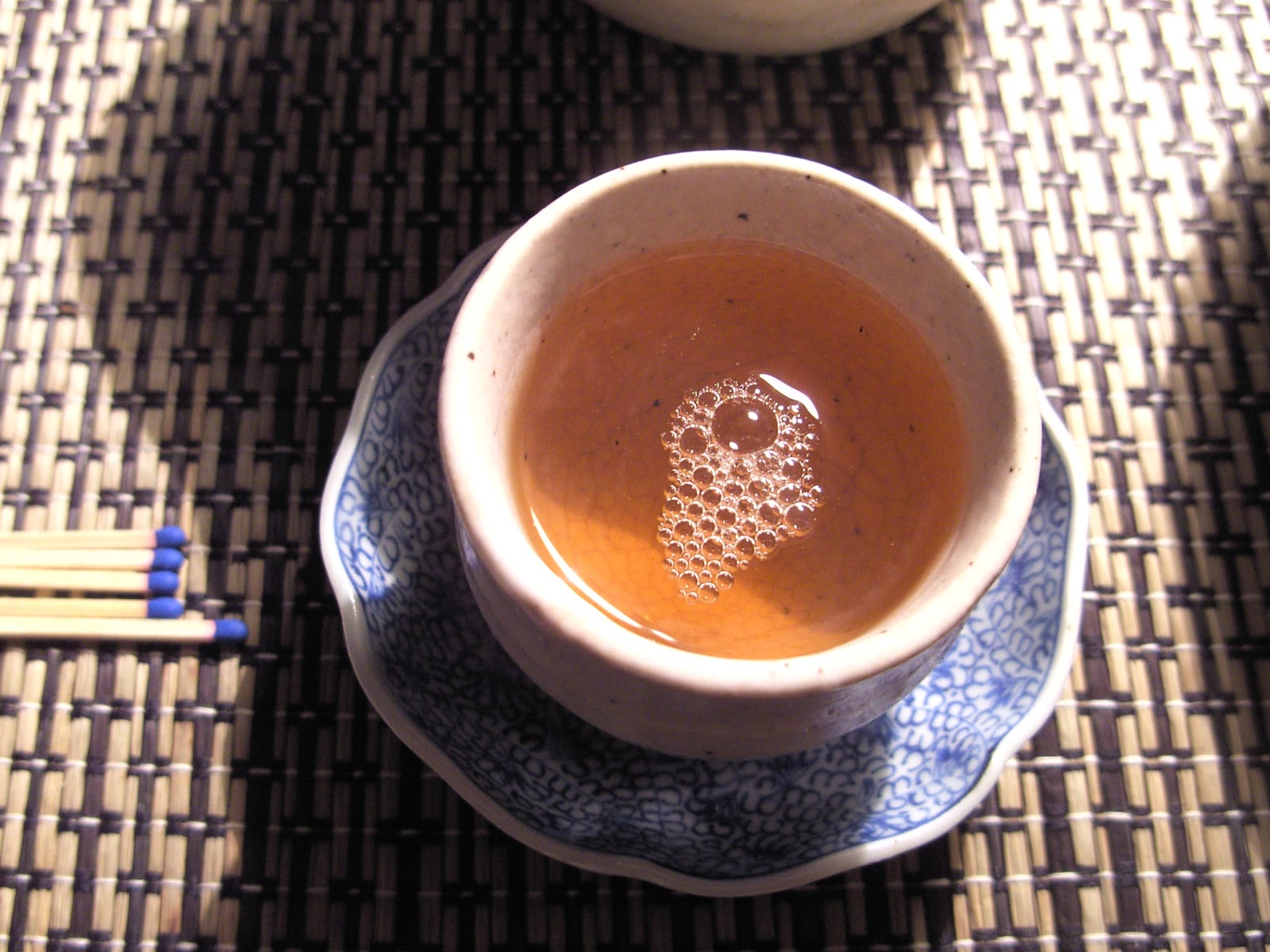
Zuerst mal ein Foto, das nicht so scharf geworden ist wie es sollte:

Rechts seht Ihr 10g von einem Osmanthus Dong Ding, von dem ich durch einen glücklichen Zufall mal einen 3kg Beutel für lau bekommen habe. (Wenn es hier Smilies gäbe, würde jetzt einer erscheinen, der über volle Bildschirmbreite grinst).
Im linken Cup sind ebenfalls 10g von genau diesem Osmanthus Dong Ding - nachdem ich mich daran versucht habe, ihn selber zu rösten.

In meinem letzten Eintrag zeigte ich mich ja von einer ziemlich risikoscheuen Seite. Dabei probiere ich gerne neue Teesorten und experimentiere freudig an der Zubereitung rum - auch auf die Gefahr hin, mal etwas in den Sand zu setzen.
Damit wären wir schon wieder beim aktuellen Experiment, aber erstmal zu meiner Motivation: Oolongs mag ich lieber nicht so grün sondern besser etwas geröstet. Klassische, bräunliche Tie Guan Yin sind mir z.B. um Längen lieber als die modernen grasgrünen Kügelchen. Aus Taiwan mag ich viel lieber die mittelstark gerösteten Hong Shui als die ganz frischen Gao Shan Oolongs. Aber damit liege ich völlig neben der Marktentwicklung - da werden die grünen Versionen viel stärker gehandelt. Auch in unser Sortiment wird wohl in absehbarer Zeit ein Tie Guan Yin kommen ... recht grün.
Da hilft nur eins: Selbermachen!

Also habe ich gestern diesen hier geröstet:

Das habe ich nach einer Anleitung gemacht, die ich bei Tea Obsession gefunden habe. Zumindest bis der Rauch meine Frau alarmierte...
Dafür habe ich 150g in unseren Reiskocher gegeben und 2 x 30 Minuten (dazwischen umgerührt) in der Einstellung "keep warm" erhitzt. Dabei strömte der herrliche Duft des Tees durch die Küche und ich befürchtete schon, das ganze Eigenaroma des Tees (durch geschickte Oxidation zum Osmanthusduft veredelt) aus dem Tee herauszubacken.
Dann wollte ich für 30 Minuten die Einstellung "cook" anwenden, aber nach 2 Minuten sprang der Schalter zurück auf "keep warm". Also habe ich den Schalter ausgetrickst ... und wurde dafür nach einer Viertelstunde mit deftigen Rauchschwaden belohnt.

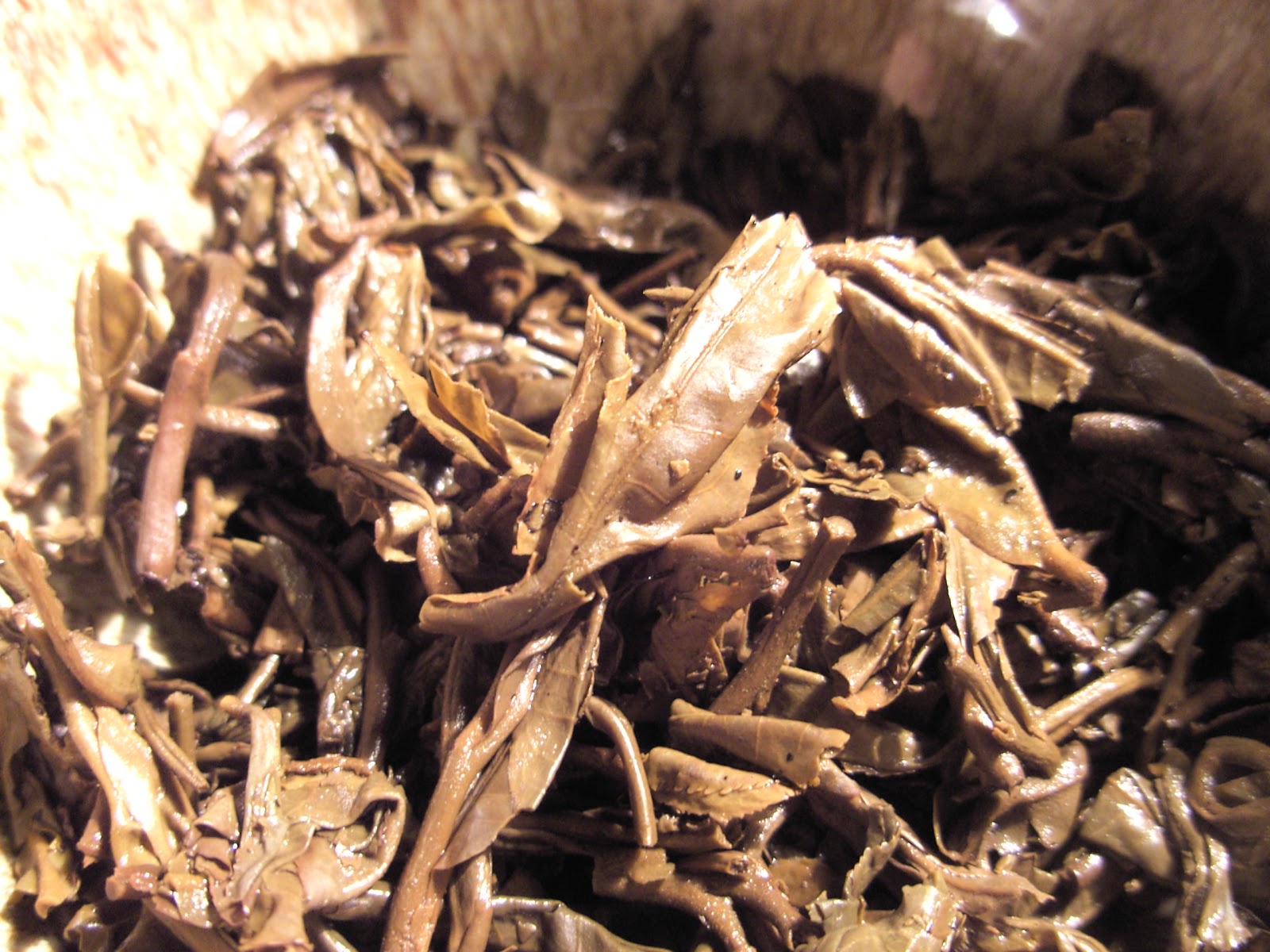
Die unterste Schicht der Blätter war angekokelt! Außerdem hatten sich die Stängel (wovon einige im Tee enthalten sind) gestreckt und dadurch die Kugeln weitgehend entrollt. Daher sieht auf dem ersten Bild dieses Eintrags die linke Schale viel voller aus als die rechte.


Völlig verdorben ist der Tee nicht. Man schmeckt zum Teil noch die leicht fruchtige Note des ursprünglichen Tees und dazu deutliche Röstnoten - als hätte man viel Houjicha (japanischer gerösteter Tee) untergemischt. Ein netter Tee zum Nebenbeitrinken - aber nicht das Ergebnis, das ich erreichen wollte. Vielleicht sollte ich es nochmal versuchen - dann im geschlossenen Grill, wo ich die Temperatur besser kontrollieren kann. Denn nach der ersten Stunde sollte die Temperatur schon erhöht werden - aber vermutlich besser indem ich die Lufttemperatur erhöhe, als dass eine Auflagefläche wahnsinnig erhitzt und die direkt aufliegenden Blätter verkohlt. Sollte ich das nochmal angehen, werde ich hier berichten.

Hat vielleicht jemand von Euch Erfahrungen damit, selber Oolong zu rösten? Über Tipps würde ich mich sehr freuen!


03.11.2012

Mengku 2003

English after a few sentences to my German readers:
Schon wieder ein englischer Eintrag? Solltet Ihr lieber eine deutsche Verkostungsbeschreibung lesen wollen: hier auf teetalk.de 
Damals hatte ich eine falsch etikettierte Probe: obwohl ich dort von 2002er Mengku schreibe, war es de facto die 2003er Version, die ich auch hier auf englisch beschreibe.

Yes, this is going to be about a specific tea - but please bear with some rambling on the topic of ageing sheng before the brewing gets started.
just a teaser for things to come


Lately there has been a lot of discussion on different blogs and on teetalk.de about ageing sheng puer at home. I deeply respect all the planning, working hours and hardware invested into the Pumidor - but I can't imagine myself attempting to age sheng at home. 

Well, I have shown you how my collection is stored, but that is meant purely for short term storage (say a year or two maximum). I don't intend to alter the tea or increase its maturity significantly. Why? No curiosity? 
I've thought about it - but perhaps I am too scared of moldy tea. The risk of investing my narrow tea budget and several years on a project which might turn out an utter disaster? No thanks, not for me!

Many argue that ageing tea at home saves money, as aged tea is usually much more expensive than younger sheng. Well there are some exceptions to this rule, for instance today's Mengku 2003 from Bannacha.

picture borrowed from www.bannacha.com


First off two points in favour of this tea which please me even whithout brewing it:
(1) honesty about its material: plantation tea, no fancy (fake?) stories about ancient trees.
(2) honesty about its age: plain 9 years, though compared to an 8 year old cake I've tried it seems much more mature and other vendors might try to sell it as a 90s cake.


Let's get started as usual: dry leaves. In a bing of medium compression we find big leaves in different shades of brown - nothing green to be seen. Hardly any stalks in this blend, but many golden buds. Even the big leaves appear quite downy. When sniffing the dry leaves in the preheated pot, my nose catches some (not too wet) basement, antique furniture and loads of camphor! After rinsing, the camphor fragrance has decreased and an overall impression of freshly turned dark earth is predominant.

Today the first infusion didn't turn out as powerful as I remember it - might be because this is my first tasting of this tea with a claypot instead of a gaiwan. Or the leaves just need more time to open up? Anyway - the fragrance is just what I look for in an older sheng: imagine opening the drawer of an antique Chinese cabinet in which a pharmacist used to store his camphor ... that's it!

But I didn't have to wait too long: the second infusion gives me a fullbodied cup with some mushroom, licorice and wood flavours. Perhaps I'm imagining things, as the widely accepted lore is that chaqi / effect beyond caffein is something found in old tree material ... but this plantation tea does something to me. How to explain this feeling? Suffice to say I start humming reggae tunes.

Third infusion adds some honey - both to flavour and to mouthfeel. The liquid seems to be more viscous, even after swallowing my mouth feels coated in camphor-honey.

Fourth and fifth infusion turn out pretty straightforward. I just checked with my notes on a first tasting of this tea in a gaiwan - back then this tea brewed up much more nuanced with many different layers of flavours and fragrances. Seems today's claypot is not the right match for this tea. Though some of the more fleeting flavours are muted, I still love this tea for its combination of persisting camphor and honey.
Okay, when the brew has cooled a little, I can also taste some mint, cedar wood and spice (cloves?).


An unexpected guest: one of the last ladybirds for this year

Very often a tea makes me think of a specific song. Songs by great artists are like condensed emotions - and often the mood of a good tea matches those emotions. This tea is in my opinion perfectly matched by kettcar's song "im taxi weinen". No the lyrics don't apply at all, but the enduring and subdued energy underlying this slow song is exactly what I feel when drinking this aged sheng.

Back to the facts about this offering from Bannacha: the tea was stored in Guangzhou under conditions which enhanced its maturation. In an e-mail to William I guessed it was wet stored - but he corrected me, stating it was stored traditionally, under monitored conditions. This makes sense - compared to a drystored (and extremely tightly pressed) 2004 Jingmai I tried, the 2003 Mengku seems to be twice as old. Still I don't get the overwhelming impression of wet basement and old potatoes which are the epitomes of wet storage to me. Some of the basement smell is there, but mostly things happen in the range of antique furniture smells - which I like a lot!

Considering the price of just 50€ (about US$ 65), this tea is great value. Sure, there are better teas from 2000 or even 1990 out there - but for triple the price I don't seem to get triple the quality.

If I had money to burn, I might try to find out how different sheng from 2012 develop over the coming 10 years in a pumidor. But being a tea drinker aware of my budget restrictions, I just sit back, raise my cup of Mengku and drink to the health of William, who offers such underpriced gems on Bannacha.
(No, I am not doing paid advertising - I just hope William might reserve one bing for me. Who knows what this blog entry might do to the stock of Mengku 2003 - some of my few readers buying it by the tong?)


27.10.2012

Mystery Hong Oolong?

Before we get started I want to repeat that this blog is not intended to be an advertising platform for my employer. But I am working there for a reason: I love our range of teas. So it will happen from time to time that I'll write about a TeaGschwendner product - but not with the objective of promoting sales (no direct effect on my income). This time it is easy: I'll write about a sample my colleagues have not yet decided on (waiting for the analysis from our lab / quality control). Advertising? Hardly think so. But read on and judge for yourself.


 Today a busy week at work ended with a very pleasant surprise: one of our tea tasters came to my desk, saying something like "Hey, Gerooolong, curious about something new?" and gave to me a generous sample of a mystery tea. When I opened the bag and took a first glance at the leaves, I thought: 'Finally a dark oolong after all those greenish modern samples.' But my nose clearly detected malty and nutty notes usually associated with black tea (or hongcha, which explains this entry's title). So - what have we got here? My colleague refused to answer my questions and asked me to find out for myself.

All right, when the leaves got out of the bag, I found many golden tips - which I have so far never seen in any oolong except baihao. But the leaves are not as multicoloured as baihao are. Actually they look more like a dancong oolong which is more slender than usual ... plus the golden tips.

Smelling the dry leaves in the quiet of my tea refuge at home, there was an overwhelming sensation of malt. Not just the maltiness found in Assam teas, but the really sweet, spicy earthy malt used in breweries. There is also something nutty - somehow in between roasted walnuts and brazil nuts.

The liquid shines in orange hues ranging from autumn foilage to sunset skies. (Well this description should eliminate all doubts: I am positively besotted with this tea!)
It fills the mouth with (guess what?) sweetness and warmth. This warmth is not just temperature but a sensation like coming inside after a walk in cold rain.
Later infusions give a very slight acidic edge to the brew's sweetness - but once the sip is swallowed, only sweetness lingers in my mouth.

So far most impressions I got pointed to black tea. But I am currently enjoying the leaves' 6th infusion - which is still fullbodied though I used relatively few leaves.  This endurance is something I am not expecting from a black tea - seems more oolongish to me.
Speaking of the devil: with infusion #7 the tea turned rather bland. Still - what's now in my cup equals the second infusion of a standard Assam leaf.


Well, my guess is that this tea is made of an oolong varietal, produced in the techniques of an oolong - just giving the leaves time to oxidize fully. Something like this tea described on Tea Masters Blog.

The wet leaves seem to agree:


Perhaps it is time to remember that the Chinese categories of  Green, White, Yellow, Blue, Red and Black Tea was systemized only last century. Compared to millennia of tea history, the six categories are just a recent invention. Most of us tea nerds like to use this set of categories when blogging or discussing on internet forums. But there is always the danger of limiting your tea experience by sticking to stereotypes associated with these categories.
This tea is something I would like to see in our range - be it blue, red or even purple. I'm just happy I don't have to write the text for this tea's label. Instead I'll just enjoy the pleasure it gives me on a cold, grey, rainy day!


20.10.2012

Tie Guan Yin: Fujian - Taiwan - Eifel

Heute geht es natürlich um Tee. Aber Tee ist mehr als Blätter und Wasser. Was ist Tee ohne die Menschen, die anbauen, verarbeiten, zubereiten ... und die einem die Augen für neue Sorten, andere Zubereitung und die Geschichten hinter dem Tee vermitteln?

Es wird mindestens ein Jahr her sein, dass ich begonnen habe meine online-Freizeit annähernd komplett den diversen Teeblogs zu widmen. Der erste Blog, den ich wirklich vom ersten Eintrag bis heute durchgelesen habe, ist Tea Masters Blog. Die Person hinter dem Blog ist Stéphane - mein erster großer Teeblog-Held. Von ihm habe ich sehr viel gelernt - super ist Tea Masters' Classroom, wo Stéphane weitergibt, was er von seinem Teelehrer oder aus eigener Erfahrung gelernt hat.

Zum letzten Weihnachtsfest habe ich von ihm etwas Tee bestellt. Darunter diesen schönen Tie Guan Yin:

Die Herkunft des Tees liegt in Anxi, dem klassischen Ursprungsgebiet des Tie Guan Yin, aber geröstet wurde er erst in Taiwan. Das ergibt diese dunklen Kügelchen:
In meinen Notizen steht zum Duft der trockenen Blätter: Röstaromen, etwas Schoko-Karamel, fast schon milder Kaffee. Im vorgewärmten Kännchen erschnuppere ich ... Schokorosinen! So muss guter Tie Guan Yin für mich sein.

Sind das nicht recht wenige Blätter für ein 250ml Kännchen? Das soll so sein - mehr dazu später.

Der erste Aufguss ist fertig: ein Tässchen für Stéphane und eins für mich:

Aber das ist doch recht wenig Tee, es ist noch einiges im Kännchen:
Moment jetzt mal - lernt man das auf Tea Masters Blog nicht ganz anders? Sollte bei Gongfu Cha nicht immer der letzte Tropfen ausgegossen werden? Wenn das Wasser auf den Blättern stehen bleibt, ist das doch 'Grandpa Style' und somit eher das Gegenteil von Gongfu. Ob Stéphane deswegen wohl seine Tasse nicht trinken mag?

Da muss ich die zweite Tasse auch selber trinken. Das mache ich gerne, denn der Tee schmeckt mir unheimlich gut - meine Notizen lauten: "Geschmack - einfach nur WOW! Frucht, Karamel, aber zu diesen warmen Noten kommt auch eine dezent mineralische Frische und Leichtigkeit."

Im zweiten Aufguss wird der Gesamteindruck wärmer, schokoladiger und die Röstnoten kommen stärker hervor.

Aber was bedeutet "zweiter Aufguss" bei meiner unorthodoxen Zubereitung? Ich sollte mal erklären wie ich diesen Tee zubereite. Wenn ich neu einschenken möchte, fülle ich kurz vorher die Kanne wieder mit heißem Wasser auf, gieße den Tee in die Tassen und lasse die Blätter weiter im Wasser ziehen. Völlig entgegen allem, was man bei Gongfu Cha lernt, oder?

Nein, denn die ganz große Lehre, die ich aus Tea Masters Blog ziehen konnte war: höre auf den Tee und ändere die Zubereitungsparameter so, dass der Tee sein ganzes Potenzial zeigen kann. Von Stéphane wurde ich inspiriert, die Geschwindigkeiten des Auf- und Abgießens zu variieren ... und siehe da - es war mehr als esoterischer Mumpitz, sondern eine deutliche Beeinflussung des Ergebnis'. Also habe ich bei den kräftig gerösteten Oolongs experimentiert und gerade bei denen, die "Aged" genannt werden, etwas herausgefunden: hohe Dosierungen, kochendheißes Wasser und sehr kurze Ziehzeiten bringen mir kaum etwas außer Röstgeschmack ... jedenfalls nur minimale geschmackliche Tiefe.

Beim Experimentieren fiel mir ein, was ich in einem Blog (war es Tea Masters?) gelesen habe: "You can not oversteep aged teas" Und tatsächlich - selbst bei andauerndem Ziehen in heißem Wasser werden stark geröstete, alte Oolongs nicht bitter (sofern man vorsichtig dosiert). Dieser Tie Guan Yin ist mit seinen 4,5 Jahren nicht gerade alt - aber die intensive Röstung sorgt für ähnliches Verhalten. So kann ich einen volleren, nuancierteren Tee in die Tasse bekommen.

Selbst nach 2,5 Stunden in heißem Wasser haben die Blätter sich noch nicht ganz entfaltet - typisch für intensiv gerösteten Oolong.
 Auch als ich keine Zeit mehr für eine richtige Tee-Session  mehr hatte, habe ich die Blätter noch weiter genutzt:

Die Schale ist von einer Töpferin in der nahe gelegenen Eifel. Das erklärt den Titel des Beitrags.
Damit schließt mein erster Beitrag einer geplanten, losen Reihe, um zu zeigen, welche Blogs mich wie beeinflusst haben. Zum Schluss löse ich noch auf, warum ich eine Hommage an eine französischen Blogger (der zu meinem großen Glück oft englisch schreibt!) auf Deutsch verfasse: er spricht und schreibt perfekt Deutsch!

Wie sieht es bei Euch aus? Woher bezieht Ihr Eure Tee-Inspirationen?

15.10.2012

2012 Jingmai Xiaobing (100g)

Schon vor mehr als einer Woche ist ein ganz niedlicher Minikuchen (=xiaobing?) bei mir angekommen, gepresst aus 2012er Jingmai Sheng von alten Bäumen. Man findet diesen Tee bei Bannacha unter diesem Link: click. Heute habe ich mich dazu überwunden, diesen Kleinen anzubrechen.

More than a week ago I received this charming minicake (=xiaobing?), made of 2012 Jingmai sheng harvested from old trees. This tea can be found at Bannacha here: click. Today I finally made myself dig into the little one.


Warum musste ich mich überwinden? Zum einen war ich nach dem Verriss des Mahei von neulich skeptisch, ob ich wohlmöglich ganz atypisch eine zweite Enttäuschung bei einem Tee von William erleben könnte. Außerdem ist der Minikuchen so niiiiiedlich, dass das Kindchenschema unweigerlich Beschützerinstinkt auslöst und man sich wie ein Grobian vorkommt, wenn man Brocken aus dem Bing herauslöst. Drittens hatte ich vor einiger Zeit eine Probe von einem 2012 Mangjing, der mir einfach viel zu grün und aggressiv war ... gleicher Jahrgang und direkte Nachbarschaft zum Minibing - schlechtes Omen?

Why did I have to 'make mysel'? First: there were my fears that I might (slim as chances are) be disappointed a second time by one of William's teas, after having found the Mahei to be somewaht lacking in character. Second: the minicake is soooo cute (running low on masculinity?) that it just makes you want to protect it.  So it feels brutish to dig into the little plump bing. Third: some weeks ago I had a sample of a 2012 Mangjing, which was just far too aggressively green for my stomach ... same vintage and directly neighboring Jingmai - bad omens?


Erleichterung beim ersten Schluck: so muss Jingmai für mich sein! Duftig, lieblich und fruchtig. Wie Haferkekse mit einer dünnen Schicht Aprikosenkonfitüre, auch eine deutlich Note von etwas adstringierendem Grüntee. Dazu der richtige Wumms von alten Bäumen: eine freiere Nase und ein sehr anregendes Gefühl im ganzen Mund. Dabei fühle ich mich nicht aufgekratzt sondern nur angenehm belebt.

First sip brought relief: this is what I expect from a great Jingmai! Fragrant, sweet and fruity. Like an oatcake with a bit of apricot jam but also a clear note of astringent green tea. On top of this there's the oomph I look for in old tree material: easier nose breathing (chronical problem for me) and a very lively mouth feeling. Not a caffein flash, just slightly envigorated.

for the binary challenged: this is brew #6 / Aufguss Nr. 6
Später geht die Fruchtigkeit zurück und der Geschmack geht in eine andere Richtung: wie süße Mürbeteigplätzchen, die mit gesalzener Butter gebacken wurden. Beim 8. Aufguss viel leichter - was aber auch daran liegen mag, dass ich etwas schwach dosiert habe.

Later the fruity notes decrease and the tea's taste reminds me of sweet shortbread made with salted butter. At least by brew #8 the tea feels much weaker - which might be due to the realtively light tea/water ratio.


Zu meinen 3 Befürchtungen von weiter oben: 1. mein Vertrauen in Williams Auswahl junger Sheng ist wieder völlig hergestellt.  Nun erstmal zum 3. Punkt: dieser Jingmai ist viel harmonischer und milder als der Mangjing. Schließlich zum 2. Punkt: der Kuchen ist so ein niedlicher Kleiner ... ich habe jetzt Angst, dass er viel zu schnell alle sein wird, weil er mir so gut gefällt.

Let's get back to my three doubts I mentioned earlier on: 1. my trust in William's selection of young sheng is fully confirmed. I'll jump to my third doubt now: this Jingmai is so much more harmonious and milder than the Mangjing. Finally the second fear: this minicake is such a tiny one ... I fear it will be used up far too soon, being so much to my liking!


13.10.2012

Ist das Ganze weniger als die Summe der Teile?

"The whole can be less than sum of its parts"

Today will be about a puer sample of 2011 Mahei (village on Yiwu Mountain). This sheng I found some weeks ago on Bannacha, but when I finally placed my order, this tea was no longer available. William informed me he took this tea off his shop for the time being, as he was dissatisfied with the way it presented itself here in Europe (as opposed to the impression he got in Yunnan).  My whining was successfull: he sent me a sample anyway.

Heute geht es um eine Puer-Probe des 2011er Mahei (ein Dorf am Yiwu-Berg). Dieser Sheng war eine Zeit lang bei Bannacha im Shop zu finden. Als ich bestellen wollte, war er aber nicht mehr verfügbar. Auf Nachfrage teilte William mir mit, dass er den Tee erstmal nicht mehr anbietet, weil er sich hier in Europa längst nicht so gut zeigt wie bei seiner Einkaufstour in Yunnan. Auf mein Quengeln hin hat er mir dann aber trotzdem ein Pröbchen geschickt.


Dry leaves looked marvelous - big and dark green with lots of fine downy hair. Some silvery buds were visible and quite a number of stalks (which I like in a bing). In the preheated gaiwan a sweet honey fragrance emanated, with just a touch of wet hay.

Die trockenen Blätter sahen großartig aus- groß und dunkelgrün mit viel silbrigem Flaumhaar. Einige silbrige Knospen waren zu sehen und eine deutliche Menge an Stängeln (was mir in einem Bing gefällt). Im vorgewärmten Gaiwan kam ein Honigduft hervor, mit einem kleinen Hauch feuchten Heus.

After rinsing, I smelled the wet leaves to find the honey fragrance having gained new fruity traits (not quite apricot, can't name this). Sniffing the gaiwan's lid, I was convinced to smell tomatoes.

Nach einer kurzen Spülung hatte der Honigduft neue, fruchtige Züge hinzugewonnen (nicht Aprikose, kann es nicht genau benennen). Am Deckel des Gaiwan erschnuppere ich - tatsächlich - Tomate.


1st infusion: turned out darker than expected. Taste was even more of a surprise: how can a young sheng be this mild and smooth? Like a lightly honey sweetend Darjeeling First Flush with a bit of Assam and some Bai Mu Dan. But also definitely sheng!

1. Aufguss: dunkler als erwartet. Geschmacklich eine noch größere Überraschung: wie kann ein junger Sheng so mild und weich sein?! Wie ein leicht mit Honig gesüßter Darjeeling First Flush mit etwas Assam und auch ein wenig Bai Mu Dan. Aber auch definitiv ein Sheng!


The above description sounds good, doesn't it? But the first bit of doubt I had, was the mismatch of fruity smell in the gaiwan and totally unfruity taste. Over the next infusions the tea turned bland rather fast. I had prepared my counting matches for up to 31 infusions - but my notes on infusion #5 read "sweet and astringent, but where's the character?"
And when infusion #8 turned out utterly flat and bland, I noted "No wonder William stopped selling it".

Die Beschreibung klingt soweit ganz gut, ne? Aber mir kamen schon Zweifel durch die Diskrepanz zwischen fruchtigem Duft im Gaiwan und völlig unfruchtigem Geschmack. Während der nächsten Aufgüsse wurde der Tee ziemlich schnell fade. Ich hatte meine Zählstreichhölzer für 31 Aufgüsse vorbereitet - aber meine Notizen zu Aufguss Nr. 5 heißen "süß und adstringierend, aber wo ist der Charakter?" Als der achte Aufguss total fade und blass wurde, notierte ich "Kein Wunder, dass William diesen Tee nicht mehr verkauft".


Aristotle said "The whole is greater than the sum of its parts" - but the saying was surely not inspired by this tea! Great looks, delicious fragrance and an amazingly soft taste ... sounds like a great tea - if only the overall impression wasn't so bland, lacking in character.

Aristoteles soll gesagt haben "Das Ganze ist mehr als die Summe seiner Teile" - aber der Ausspruch gilt nicht für diesen Tee! Großartiges Aussehen, leckerer Duft und ein erstaunlich weicher Geschmack ... klingt wie ein toller Tee - wenn nur der Gesamteindruck nicht so fade wäre, so bar jeden Charakters.


Perhaps I have been spoiled by bold and assertive sheng from Yongde and Mengku (my usual fare, plus some Mangjing) and can't appreciate this mild Yiwu's charms. Or my brewing skills were inadequate. Or William was just right to take this off his shop. This commitment to quality is something I deeply appreciate!

Vielleicht bin ich ja verdorben durch die kräftigen Sheng aus Yongde und Mengku (die ich sonst meist habe, sowie etwas Mangjing) und kann den milden Charme dieses Yiwu nicht würdigen. Oder meine Zubereitung war ungenügend. Oder William hatte einfach Recht damit, den Tee erstmal aus seinem Shop zu nehmen. Diese Selbstverpflichtung zur Qualität ist etwas, das ich äußerst schätze!


10.10.2012

Zealong: Oolong aus Neuseeland

Woran denkt Ihr bei "Neuseeland"?

Die wunderschönen Landschaften, wo "Herr der Ringe" gefilmt wurde?

An die beeindruckenden Haka-Darbietungen der All Blacks?
Oder inzwischen auch an Oolong?

Gestern Abend hatte ich wieder etwas von dem wahrlich überraschenden Zealong aus dem Waikato-Gebiet auf der Nordinsel.

Dieser Tee erinnert mich unheimlich an den ersten grünlichen Oolong, den ich 1991 in Taipei geschenkt bekommen habe - davon war ich das erstemal 'tea drunk'.
Berauscht und fahruntüchtig fühlte ich mich gestern nach dem Zealong nicht - er wirkt auf mich gleichzeitig entspannend und konzentrationsfördernd, mit einem sehr klaren, frischen Geschmack.

Normalerweise bin ich ja kein großer Freund dieser hellen Oolongs. Aber bei diesem hat genug Oxidation stattgefunden, dass sich ein paar fruchtige Aromen gebildet haben. Diese bleiben aber eher abrundend im Hintergrund - prägnanter empfinde ich eine mineralische Note, die für den klaren & frischen Charakter verantwortlich ist.


Zealong stellt auch einen stärker gerösteten Oolong ('Dark') her, von dem ich noch ein originalverschweißtes Päckchen hier habe, das ich in 2-3 Jahren mal öffnen will. Und dann hatte ich noch das sehr große Glück, von unseren Tea Tastern ein ganz besonderes Muster zu ergattern: "Zealong Aged". Ein wunderbar dunkler, kräftig gerösteter Oolong, der leider in viel zu kleinen Mengen produziert wird, als dass er in den Handel kommen könnte.

Leckerer Tee macht mich attraktiv für die jungen Damen 

Wie sind Eure Erfahrungen mit Oolongtees aus ungewöhnlichen Anbauregionen? Schonmal einen hawaiianischen Oolong probiert?